
What Makes a Person Irreplaceable
Klara and the SunThe novel tests whether memory, behavioral accuracy, or an inner essence can reproduce a person, ultimately locating uniqueness in relationships as well as individuals.
increasing Bearing strength in each event
 decreasing
Bearing strength in each eventdecreasingKlara’s Observational Skill
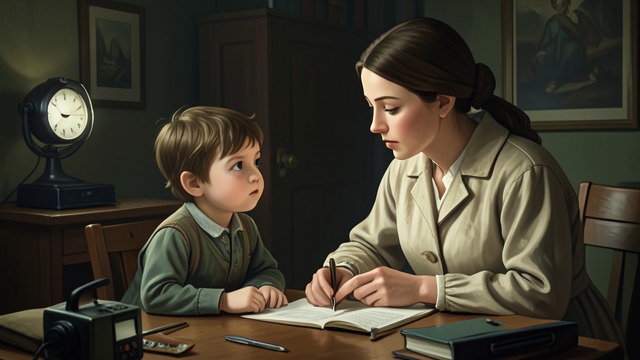
Behavior as Evidence
Precise Recall
Klara recalls Josie’s eye color, voice range, and guarded walk. The Mother sees these details as evidence that Klara could understand her daughter unusually well.
A Question Opened
The successful test makes imitation seem possible, but it does not prove that observation can reproduce a whole person. That uncertainty becomes central later.
The Portrait Double
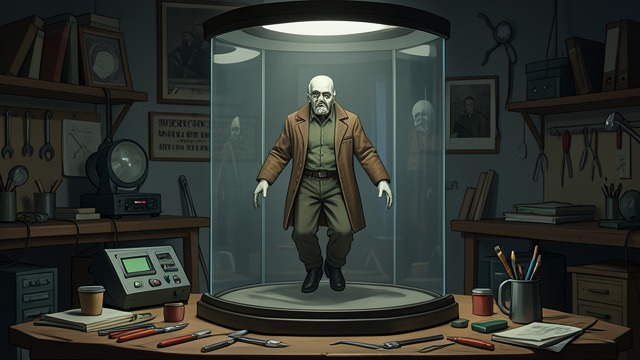
A Body Waiting to Be Filled
A Close Resemblance
Klara sees the artificial Josie suspended in a studio. Its physical likeness is convincing, but its expression is disappointed and afraid.
Appearance Is Not Continuity
The figure makes the difference between copying a body and continuing a life difficult to ignore. Klara recognizes the project’s physical ambition without knowing whether its emotional claim is possible.
Capaldi’s Claim

The Scientific Argument
Transferable Traits
Capaldi says science has found nothing unique inside Josie that an AF cannot continue. He treats the survey as evidence that Klara can access her impulses and desires.
The Mother’s Doubt
The Mother cannot accept that proof would make a substitute her daughter. The disagreement exposes the limits of treating emotional identity as a technical problem.
Paul’s Rooms Within Rooms
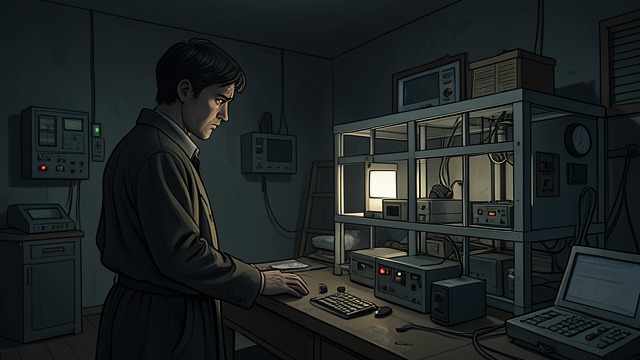
The Heart as an Unfinished House
A Difficult Question
Paul asks whether learning Josie requires entering every room of her heart, including rooms within rooms. He doubts that Klara could ever reach the deepest layers.
Klara’s Answer
Klara believes a human heart must eventually be limited and therefore learnable. Her confidence is compassionate, but it rests on a different understanding of what a person is.
The Loved One’s Heart
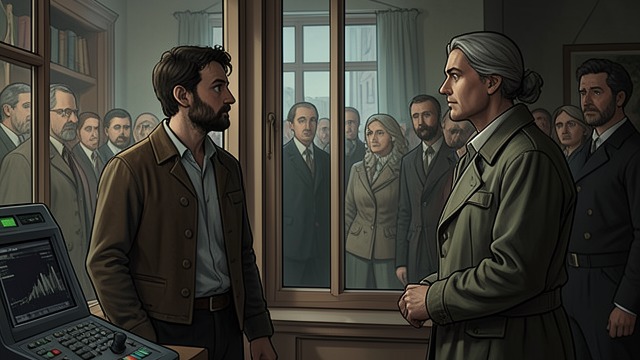
A Revised Understanding
The Place of the Special
Klara says Capaldi searched in the wrong place: what was special about Josie existed in the hearts of people who loved her.
Limits of Continuation
Klara believes she could have imitated Josie accurately yet failed to inherit those relationships. Her conclusion rejects both simple equivalence and the idea that affection is only a technical copy.
when Josie’s family tests her at the store
during Klara’s first visit to Mr Capaldi’s studio
after Klara completes the studio questionnaire
during the drive after the theater meeting
during Klara’s final conversation with Manager
